


Heavy Trucks in Idaho to Be Allowed to Travel Up to 80 MPH Starting July 1; Trucking Industry Raises 'Grave' Safety Concerns; Over 70% of Truckers Say They Won't Speed Up
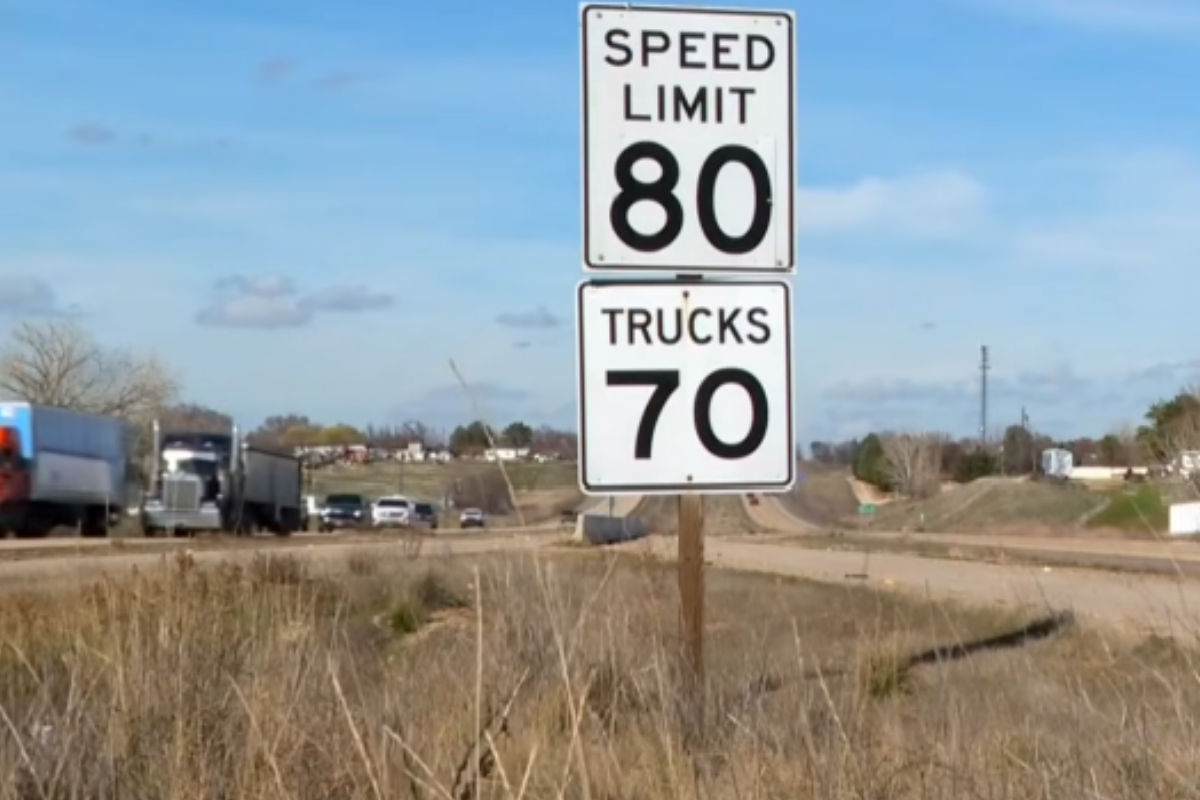
BOISE, IDAHO — A new Idaho law taking effect July 1 will eliminate the state's split speed limits for heavy commercial trucks on certain rural interstates, allowing trucks weighing more than 26,000 pounds to legally travel at 80 mph alongside passenger vehicles — a change that lawmakers say will improve traffic flow but that trucking industry leaders say raises serious safety concerns.
The Law
Sponsored by Rep. Doug Pickett, R-Oakley, and signed by Gov. Brad Little on March 23, the law removes the lower speed limit that has applied to heavy trucks on some Idaho interstates for over a decade. Under the current system, passenger vehicles can travel at 80 mph on certain rural stretches while trucks are capped at 70 mph. Starting July 1, a uniform 80 mph limit will apply to both.
The Idaho Transportation Department board authorized the change in a 3-2 vote, directing staff to begin removing truck speed limit signs on July 1, a process expected to take about a day. The new limit will affect Interstate 84 west of Caldwell and east of Boise in the Treasure Valley, as well as sections of Interstate 86 and Interstate 15 further east.
The Case for Uniform Speeds
Pickett argued that differential speed limits — not speed itself — are the root cause of many highway crashes, citing a 2005 University of Arkansas study finding that vehicles traveling 10 mph below the posted speed limit experience 227% more traffic interactions than vehicles keeping pace with traffic.
"What this addresses is the fact that inconsistent road conditions are the biggest dangers on the highway, not speed itself," Pickett said. "Speed doesn't kill. Differential speed kills."
He also pointed to a common frustration: trucks traveling side-by-side in both lanes of a two-lane freeway, blocking faster-moving traffic. "You have a very sudden interaction there, and usually that involves a string of vehicles," he said.
Pickett estimated Idaho is now one of ten or fewer states still using split speed limits, and said states across the country have been moving away from the approach for years.
The Industry's 'Grave' Concerns
Allen Hodges, president of the Idaho Trucking Association, pushed back strongly, saying the association has grave safety concerns about the new law, though the group's official position was neutral.
Hodges pointed to ITD crash data suggesting that higher speed limits on Idaho highways lead to more fatalities and injuries in crashes between commercial trucks and passenger vehicles. He also noted that heavier trucks require significantly longer stopping distances at higher speeds. "Idaho is only one of two states that the federal government allows 129,000-pound loads daily on the freeway system," Hodges said. For those heaviest trucks, he said, braking distance increases by nearly 200 feet at 80 mph compared to lower speeds.
Hodges also raised a practical concern: most commercial truck tires are only rated for speeds up to 75 mph, and more than 70% of trucking association members say they will not increase their speeds under the new law. Many trucks also have speed governors that prevent them from exceeding a set limit for safety and fuel efficiency reasons.
"That's a red flag right there, when you have a commercial driver saying, 'We don't need to do this,'" Hodges said. He also expressed frustration that the association's suggestion — legislation limiting trucks from traveling in the left lane on rural interstates — was ignored. "It fell on deaf ears," he said.
ITD Board Divided
The ITD board's vote reflected similar tensions. After staff presented a speed study suggesting that narrowing the gap between car and truck speeds would reduce commercial vehicle collisions, board chair Bill Moad was unconvinced. "I disagree. I understand we're not having a chance to appeal this, but 80 miles an hour will not solve the differential between cars and trucks," he said, noting that ITD's crash data does not differentiate between 26,000-pound trucks and those up to 100,000 pounds heavier.
"I just don't see it being in the public's best interest," said board member Paul Franz. "They're not going to increase their speed. We don't want them to. It makes trucks tip over, and when they do, they wipe out, usually taking other traffic with them."
What Drivers Should Expect
Idaho State Police spokesperson Aaron Snell said drivers may begin seeing commercial vehicles traveling at higher speeds on rural interstates after July 1, but cautioned that the law does not change the physical realities of operating a large truck.
"While this law changes posted speed limits, it does not change the realities of operating large commercial vehicles. Trucks require greater stopping distance, have significant blind spots, and may travel below the posted limit due to equipment, loads, or road terrain. Drivers should not assume traffic will move uniformly and must continue to drive attentively and responsibly," Snell said.
Information courtesy of local media.

 Spanish
